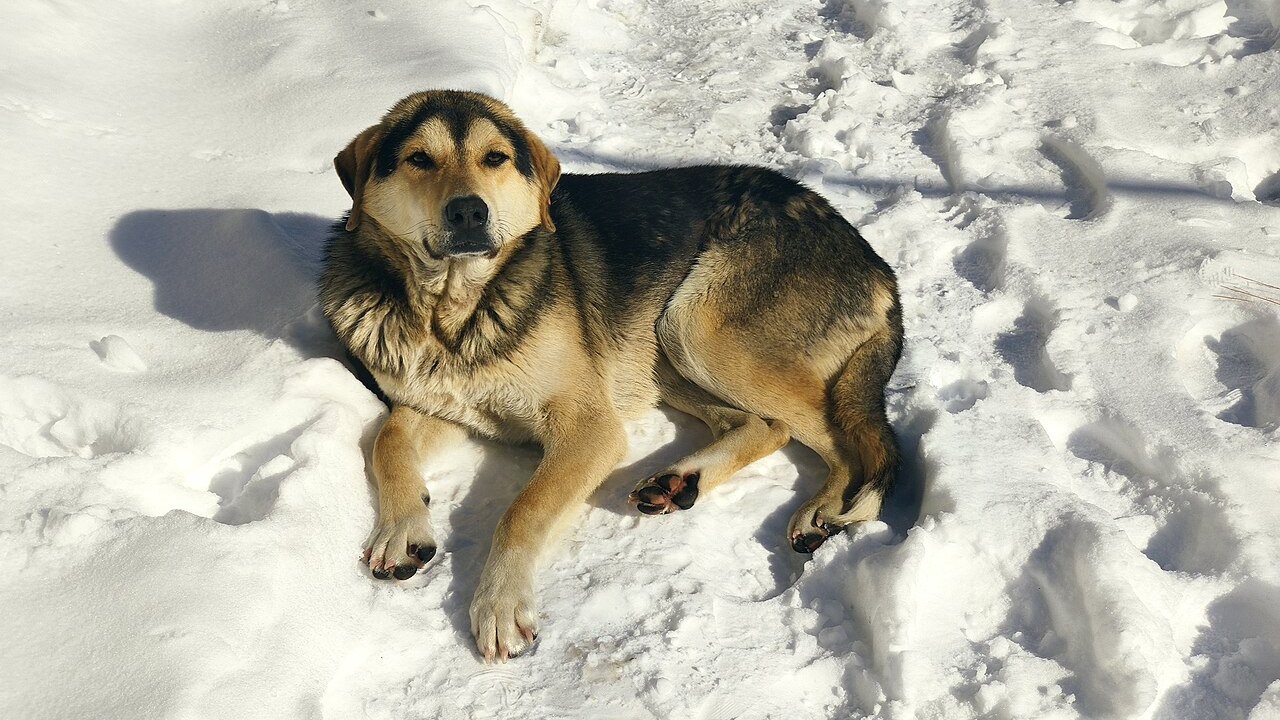
Most dogs love a good romp in the snow. Their paws, on the other hand, take a beating every winter. Ice cuts, salt burns and dry, cracked pads are all common this time of year, and they can turn a fun walk into a limping trip home.
The good news is that a few small habits make a big difference. Here’s how to keep your dog’s feet happy until spring.
1. Wipe paws after every walk
Road salt and chemical ice melt cling to fur and pads. If your dog licks them off at home, it can upset their stomach. Keep an old towel or a bowl of warm water by the door and give each paw a quick wipe as soon as you come inside.
2. Trim the fur between the pads
Long tufts of fur between the toes collect little ice balls that pull and sting. Trimming that fur flush with the pads (or having your groomer do it) keeps snow from clumping up.
3. Try a paw balm or wax
A thin layer of paw wax before you head out works like an invisible boot. It helps protect pads from salt and keeps them from drying out. Rub a little more in after you wipe their feet at night.
4. Consider dog booties
Booties look silly for about five minutes, and most dogs do a funny high-step walk at first. Start indoors with short sessions and lots of treats. Once your dog gets used to them, they’re the best protection you can buy for icy sidewalks.
5. Choose pet-safe ice melt at home
You can’t control what your neighbors put down, but you can control your own driveway and steps. Look for ice melt labeled pet-safe, and keep the bag stored where curious noses can’t get into it.
6. Keep walks shorter on bitter days
When the temperature drops into the teens or the wind chill gets nasty, cut walks down to quick potty breaks. Small dogs, short-haired breeds, puppies and seniors feel the cold faster than big fluffy breeds.
7. Watch for signs of trouble
Limping, licking at their feet, lifting one paw off the ground or red, cracked pads are all signs it’s time to head home. Check between the toes for small cuts from ice. If a pad is bleeding, swollen or not healing after a few days, call your vet.
8. Stay away from frozen ponds
Ice on ponds and creeks can look solid and still give way under a running dog. Keep your pup leashed near water in winter, and never go out on the ice after them.
9. Watch out for antifreeze
Antifreeze tastes sweet to dogs and is extremely toxic, even in small amounts. Steer your dog away from puddles in parking lots and driveways, and clean up any drips in your garage. If you think your dog licked some, call your vet right away.
10. Make yourself easy to see
Winter evenings get dark early. A reflective collar, a light-up leash or a small clip-on light helps drivers spot you both on those late-afternoon walks.
A little prep goes a long way
Winter doesn’t have to mean staying cooped up inside. With clean paws, a little wax and a watchful eye, your dog can keep enjoying those crisp morning walks right along with you.
Featured image: Dog of Dmanisi (1) by Reda Kerbush, CC BY-SA 4.0, via Wikimedia Commons (cropped)

Leave a Reply