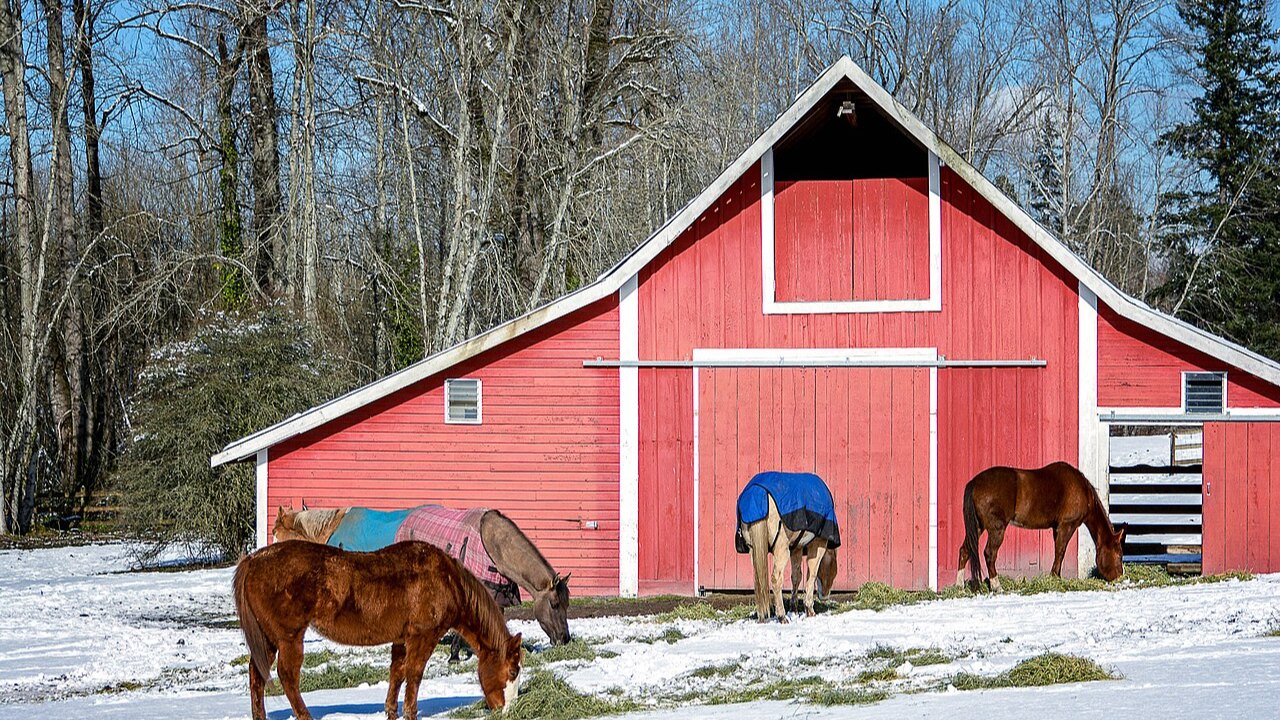
Winter on the farm means frozen water buckets, muddy paddocks and early mornings in the cold. Most horses and farm animals handle cold weather better than we do, as long as they have the basics covered.
Here are 10 ways to help your animals stay healthy and comfortable this winter.
1. Keep water from freezing
This is the big one. Horses and livestock drink less when water is icy cold, and that raises the risk of colic and dehydration. Tank heaters or heated buckets are worth every penny. Check them daily, since they can fail without warning.
2. Feed more hay
Digesting hay creates heat inside the body, so extra forage is like an internal furnace. On bitter nights, a few more flakes of hay will help more than extra grain.
3. Provide a windbreak
Most animals don’t need a heated barn, but they do need a way to get out of the wind and wet. A run-in shed, a barn or even a solid tree line can make a huge difference.
4. Blanket only when it makes sense
Many healthy horses with a full winter coat do fine without a blanket. Blankets help horses that are clipped, older, thin or not used to the cold. If you do blanket, check underneath often for rubs and make sure your horse isn’t sweating.
5. Check body condition by hand
A thick winter coat and a blanket can hide weight loss. Run your hands over ribs and hips every week or so to make sure your animals are holding their weight.
6. Watch the hooves
Snow can pack into hooves and form icy balls that make walking tricky. Pick hooves daily and ask your farrier about snow pads. Muddy conditions also raise the risk of thrush.
7. Keep chicken coops dry and ventilated
Chickens handle cold well, but damp air leads to frostbite on combs and wattles. Good ventilation up high (without drafts at roost level) matters more than heat.
8. Give goats a dry place to rest
Goats hate being wet. Make sure their shelter has dry bedding and stays out of the wind. Deep straw bedding gives them a cozy place to snuggle together.
9. Keep salt and minerals available
Salt encourages animals to drink more water, which helps prevent winter colic and keeps digestion moving.
10. Plan for icy footing
Spread sand or stall pellets on icy paths and gate areas. A slip can hurt you just as easily as your animals, so take care of the walkways you use every day.
Keep an eye on the little things
Do a quick check of every animal at each feeding. Catching a frozen waterer, a limp or a skipped meal early is the best way to get through winter with a happy, healthy barnyard.
Featured image: Horse With No Blanket Or Two Cold Horses (247771017) by Dana Hutchinson, CC BY 3.0, via Wikimedia Commons (cropped)

Leave a Reply